
Listen to the article
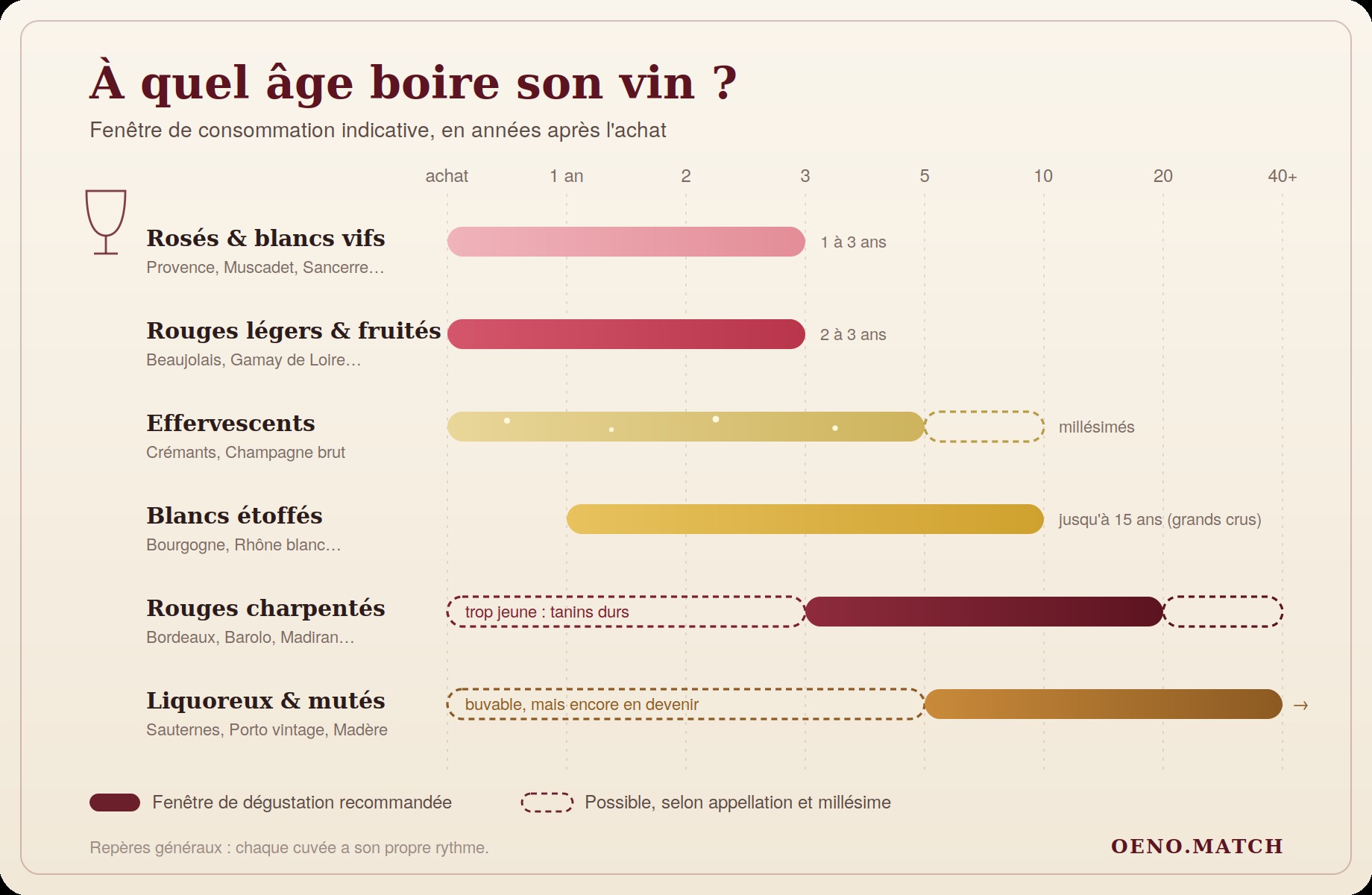
You hear it at every meal: "Keep it, it will be better in ten years." In reality, the vast majority of wines sold today are made to be drunk within two or three years. Aging wine is the exception, not the rule.
A matter of structure
What allows a wine to age are its "natural preservatives": tannins, acidity, sugar, alcohol. A light red, a crisp white or a rosé doesn't have enough of it. It loses its fruit over time and gains nothing in return.
Conversely, a structured red (Bordeaux, Barolo, Madiran) is often austere when young: its tannins need several years to soften. Dessert wines and fortified wines (Sauternes, vintage Porto) play in another category: sugar and alcohol protect the wine, and some easily traverse the decades.
Three stories that challenge conventional wisdom
The oldest wine in the world has never been opened. In Spire, Germany, a Roman bottle dated around 325 AD is displayed intact in the museum. Researchers hesitate to open it: the liquid is probably stable after 1,700 years… but certainly undrinkable. Proof that "keeping" and "staying good" are two different things.
Champagne from a shipwreck. In 2010, divers brought up from the bottom of the Baltic bottles of Veuve Clicquot and Juglar about 170 years old. Preserved at 4°C, in total darkness and without any vibration, they were still drinkable (very sweet, as champagne was liked at the time). The sea floor checks all the boxes of an ideal cellar.
Madeira loved cruises. In the 18th century, Madeira producers noticed that their wine came back better from a round trip to the Indies, heated and shaken in the holds of ships. They eventually reproduced this heating on land. Result: a nearly indestructible wine that can be forgotten open for months without changing.
The right reflex
Before taking a bottle down to the cellar, ask yourself three questions:
What type of wine? Light and fruity: drink it quickly. Tannic, dessert or fortified: it can wait. What appellation, what vintage? A grand cru in a fine year is nothing like an entry-level cuvée. What is your taste? Some prefer the crisp fruit of a young wine to the forest floor aromas of an evolved wine. There is no wrong answer.
And if doubt persists: use Oeno.match, the app for wine lovers, 100% free, which tells you everything you need to know.