
Light and Alcohol-Free Wines: The New Frontier of an Industry in Transformation

Light and Alcohol-Free Wines: The New Frontier of an Industry in Transformation
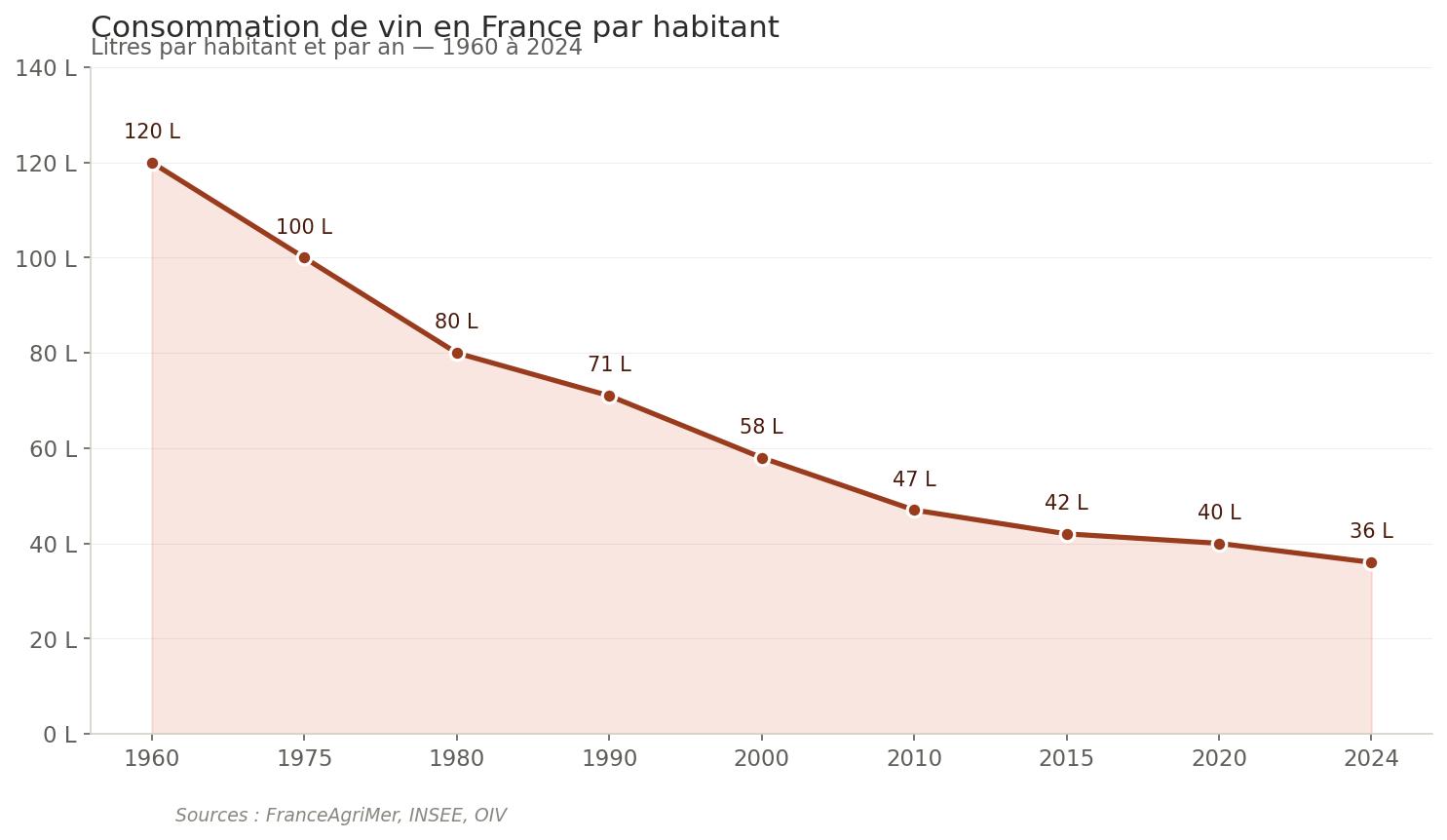
The French cellar is reinventing itself. Where once stood robust bottles destined for daily meal accompaniment, now emerge bottles displaying reduced or eliminated alcohol degrees, embracing a fundamental trend that the wine industry can no longer ignore. This movement is not a passing fad: it reflects a profound generational shift in our relationship with alcohol and wine itself.
According to Logic-wine, the data tells an unequivocal story. Between 1960 and 2025, French wine consumption per capita dropped from nearly 120 liters annually to less than 40 liters. Even more revealing: in 1980, more than 50% of French people declared drinking wine every day. Today, this percentage has collapsed to less than 10%. A major rupture that exposes a reality: daily wine, mundane and consensual, gives way to thoughtful and occasional consumption.
Interesting paradox pointed out by Logic-wine: while volume decreases, the overall market value remains stable. Consumers buy less wine, but spend the same amount. They seek quality, experience, not quantity. It is in this soil that alcohol-free wines and light wines prosper.
The 2025 barometer figures on alcohol-free wines reveal growing acceptance. According to Rayon-boissons, 52% of wine consumers declare interest in this category. More than half. These are not marginal niches, insists Anne Peguilhan, manager of Seeds consulting firm in this article: it's a category that is solidly establishing itself. Even more revealing: 19% of French people declare themselves already consumers of alcohol-free wine in 2025. The most receptive targets are adults aged 35 to 49, millennials and, notably, women.
Jérôme Cuny, founder of the La Cave Parallèle network, offers an enlightening commercial perspective. According to Rayon-boissons, he estimates that "75% to 80% of his shop visitors are alcohol drinkers who wish to manage their consumption without changing their habits too much and the vast majority are wine consumers". The message is transparent: these new consumers do not reject wine. They reinvent it.
This shift conceals a broader behavioral evolution. The generations reaching adulthood have grown up in a context where alcohol moderation was no longer taboo but an accepted norm. Daily consumption, once a symbol of French normalcy, now appears as a legacy. Young generations claim the right to taste without volume obligation.
The motivation of alcohol-free wine consumers, according to Rayon-boissons, also reveals a turning point: the search for pleasure gains 11 preference points. This is not abnegation; it's a quest for satisfaction constructed differently. Producers who have understood this nuance — offering pleasure, not sacrifice — find an audience.
The purchasing experience itself is transforming. Customers no longer settle for a bottle offered to them out of habit. They question, compare, explain their choices. Rayon-boissons emphasizes that the upper middle class represents 26% of alcohol-free wine consumers, indicating that this trend is not a cheap product reserved for abstainers, but a sophisticated consumption segment.
For the French wine industry, the message is clear: light and alcohol-free wines are no longer tolerated marginal experiments. They embody the future of urban, informed, generational consumption. Producers who ignore this transformation risk finding themselves progressively out of step with their market. Those who can offer qualitative alternatives, without compromising on taste pleasure, will capture the energy of a new expanding clientele. French wine has known how to reinvent itself many times in its history. This new transformation could well be one of its most profound.