
Listen to the article
La Rioja has undergone a profound transformation over the past twenty years. Wine estates are no longer just production sites. They are reinventing themselves as cultural destinations where architecture and design dialogue with the vine. This trend, which emerged in California and Australia, has taken root in Spain and is reshaping wine landscapes.
Marqués de Riscal and Ysios illustrate this evolution. The former entrusted Frank Gehry, the architect of the Guggenheim in Bilbao, with creating a building in dialogue with the terroir's traditions. An undulating titanium and steel roof follows the natural contours of the La Rioja landscape without overwhelming it. The contrast between this contemporary boldness and the historic 19th-century cellars strikes the visitor.
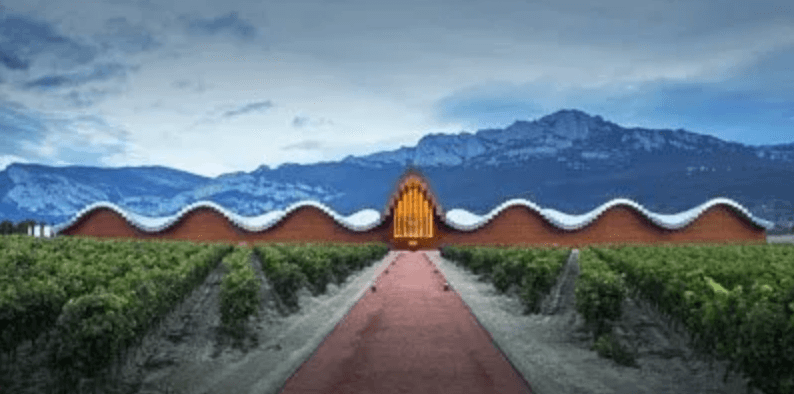
Ysios, designed by Álvaro Siza, takes a different path. Inspired by the geometry of the vines and local topography, this cellar integrates into the territory rather than confronting it. The undulating facades and reflected light effects make the visit a contemplative experience.
This architectural approach responds to a precise commercial logic: heritage, high-end wine tourism, new sensory experiences. Visitors no longer come just to taste. They seek an aesthetic immersion around wine.
La Rioja is redefining the contemporary wine estate. Between heritage and creation, between function and art, cellars become constructions that pose a question: will 21st-century wine be primarily a product or an experience?