
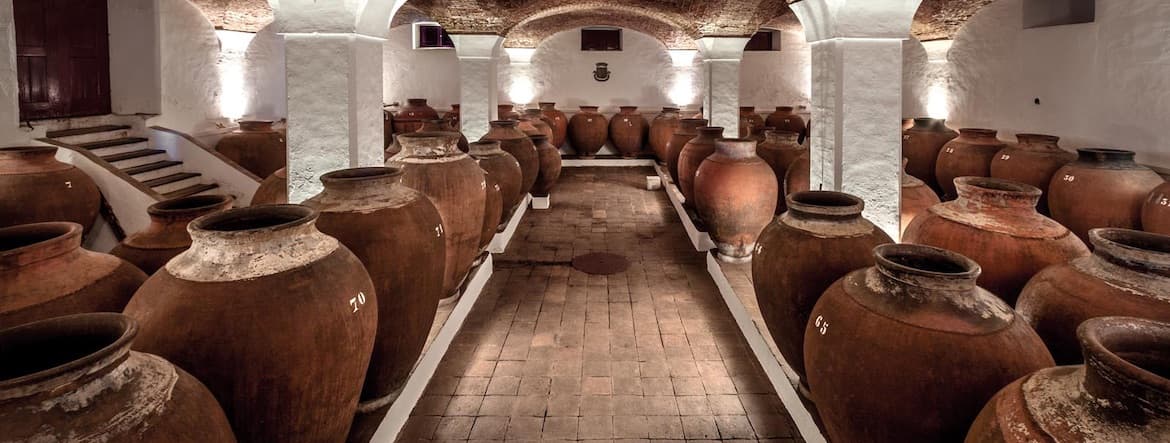
Alentejo rediscovers its ancient amphoras
In the cellars of Alentejo, a wine region in southern Portugal, the characteristic sound of terracotta amphoras resonates once again. These ancestral vessels, locally called "talha", mark the return of a two-thousand-year-old technique that contemporary winemakers are adopting with a resolutely modern vision.
The renaissance of vinhos de talha
This practice inherited from Roman times had gradually disappeared in favor of methods considered more modern. However, for about ten years now, estates in the region have been revisiting this traditional approach with a fresh perspective. The amphoras, buried in the ground up to the neck, offer unique winemaking conditions thanks to their controlled porosity and natural thermal inertia.
Fermentation in talha is distinguished by the complete absence of technological intervention. Grapes ferment spontaneously thanks to indigenous yeasts, in an environment where temperature remains stable. This method produces wines with particular organoleptic profiles, marked by a silky texture and aromas of remarkable purity.
An ancestral technique with multiple advantages
The clay of the amphoras allows gentle micro-oxygenation, comparable to that of oak barrels but without the woody notes. This controlled porosity favors wine evolution while preserving the pure expression of fruit and terroir. Winemakers also observe better tannin integration and naturally balanced acidity.
The ovoid shape of talha also creates natural circulation of lees, a phenomenon impossible to reproduce with other containers. This perpetual movement enriches the wine's texture without requiring manual bâtonnage, a common technique in traditional winemaking.
Contemporary adaptation of ancient knowledge
Current producers don't simply faithfully reproduce ancient methods. They adapt the technique according to contemporary requirements, particularly in terms of hygiene and traceability. Some estates thus combine amphora vinification with partial aging in stainless steel tanks, creating unprecedented blends.
This hybrid approach allows preserving the organoleptic benefits of talha while perfectly controlling production parameters. Winemakers also adjust skin contact duration according to grape varieties, particularly on indigenous varieties like Antão Vaz or Trincadeira.
A response to market expectations
This renaissance is part of a broader movement seeking authenticity from consumers. Vinhos de talha seduce with their unique character and historical dimension, responding to growing demand for differentiating products.
Exports of these wines are experiencing notable growth, particularly to Nordic and Anglo-Saxon markets. This clientele particularly appreciates the narrative dimension of these cuvées, true witnesses to a preserved tradition.
The environmental aspect also constitutes a significant commercial asset. Amphora manufacturing uses only local clay, and their lifespan far exceeds that of conventional containers. This approach appeals to clientele sensitive to sustainable development issues.
Challenges of modern production
Despite this enthusiasm, talha vinification presents significant technical constraints. Cleaning and maintaining amphoras requires particular attention, and their limited capacity imposes an artisanal approach incompatible with industrial volumes.
Mastering this technique also requires specific know-how that few winemakers still possess. Some estates call upon specialized consultants or collaborate with the last potter artisans mastering traditional talha manufacturing.
Production costs also remain higher than conventional methods, which impacts final selling prices. This economic reality naturally limits the diffusion of these wines to a premium market segment.
A heritage to preserve and develop
Beyond the commercial aspect, this renaissance of vinhos de talha participates in preserving unique cultural heritage. Several local initiatives aim to transmit this know-how to new generations of winemakers and document traditional techniques.
Alentejo now has about forty producers practicing amphora vinification, compared to a handful twenty years ago. This dynamic is accompanied by growing recognition from national and European wine institutions.
This rediscovery of amphoras perfectly illustrates the innovation capacity of contemporary viticulture, which draws from its history to reinvent its future. Alentejo's vinhos de talha thus offer a unique tasting experience, the fruit of two millennia of tradition and a resolutely modern vision of wine.