
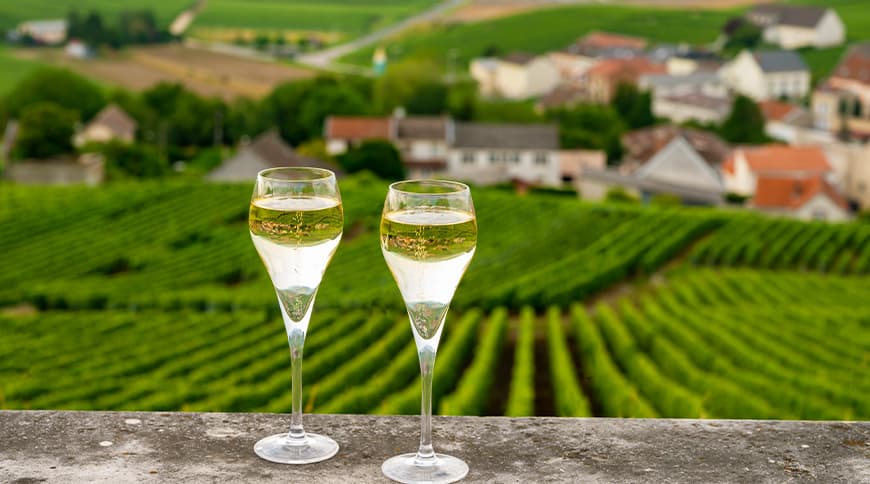
Champagne embodies much more than a sparkling wine. It is a territory, a method and an art of living that have crossed centuries to become the universal symbol of celebration. From the Champagne region to tables around the world, this French appellation carries within it a history of terroir, innovation and commercial conquest that deserves attention.
The magic of champagne lies in three fundamental elements: a singular terroir, a highly codified method and specific grapes. The region, located about 150 kilometers northeast of Paris, benefits from a cool climate shaped by France's northernmost vineyard. It is precisely this coolness that allows the grapes to achieve ideal natural acidity, essential for producing the base wines necessary for secondary fermentation. Chardonnay, pinot noir and pinot meunier dominate the grape varieties, each bringing its particular taste signature.
Champagne production remains impressive in volume. The region generates approximately 300 million bottles annually, making it one of the most productive vineyards in the world despite its relatively modest surface area of around 34,000 hectares. Historic Houses like Veuve Clicquot, Dom Pérignon or Moët & Chandon represent a large share of this volume, but this apparent monopoly conceals a more nuanced reality: nearly 20,000 grower-producers cultivate their own vines and produce their own cuvées.
In recent decades, champagne has undergone a remarkable transformation. The 1980s and 1990s saw the appellation become more professional, improve its quality standards and diversify its expressions. The increase in average bottle prices, particularly since 2015, reflects this move upmarket. Prestigious cuvées and rare vintages now reach prices that rival great Burgundies or Bordeaux. In parallel, a new generation of younger winemakers has brought dynamism, exploring less dosed styles, more mineral, sometimes in organic farming.
On the international scene, champagne plays the role of undisputed king at will. Its exports represent approximately 60% of its production, feeding demand notably from the United States, United Kingdom and Japan. In China, champagne remains a symbol of success and prestige, although it faces growing competition from local sparkling wine producers. In 2022, global shipments exceeded 180 million bottles, a figure that shows its resilience despite health and geopolitical crises.
Beyond the established giants, several more modest estates deserve the attention of discerning collectors. Krug, although prestigious, embodies a certain artisanal philosophy shared by producers like Jacquesson, renowned for its singular cuvées and innovative approach. Jacques Selosse also generates growing interest for its wines of great complexity and passionate approach. More accessible, the Blanc de Blancs cuvée offered by certain small producers from Cramant or Avize is gaining recognition among demanding enthusiasts seeking authenticity.
Champagne therefore remains very much alive, far from resting on its historical laurels. It is an appellation in perpetual evolution, which knows how to combine tradition and renewal to preserve its international aura while offering those who explore it discoveries worthy of its promises.